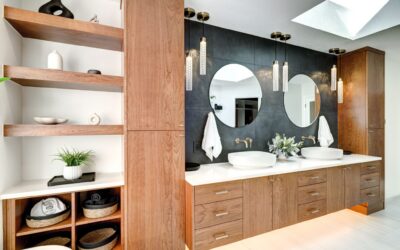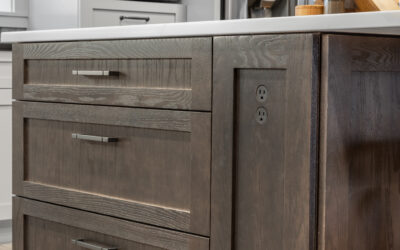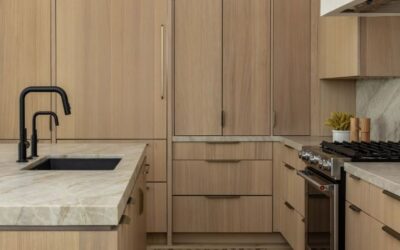
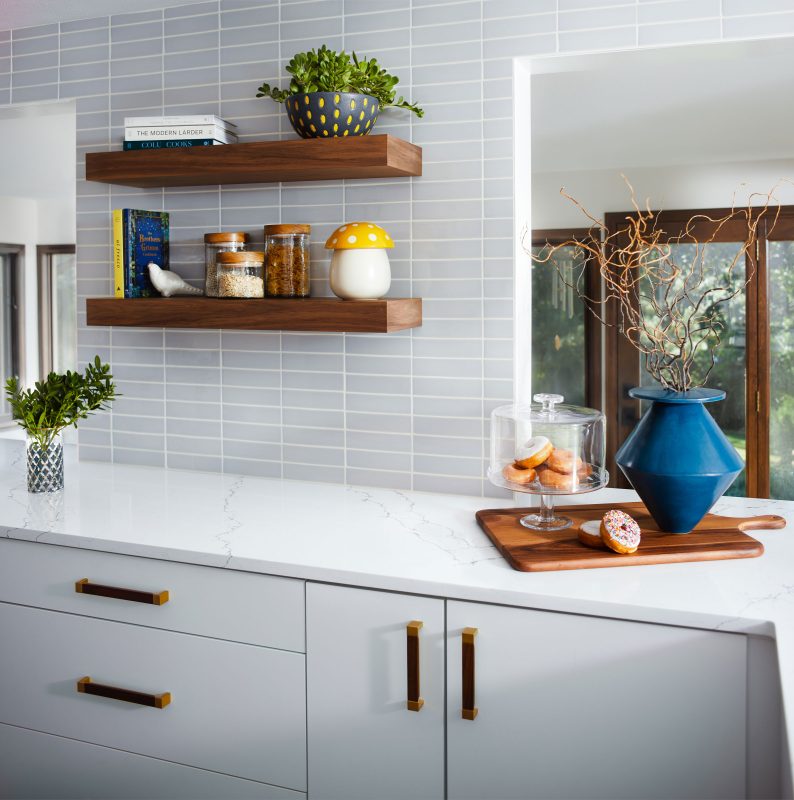
If you’ve spent any time flipping through kitchen inspiration lately, you’ve probably noticed the same debate popping up again and again: open shelving versus upper cabinets. It’s a small design choice that sparks surprisingly strong opinions — and if you’re planning a kitchen renovation for your home here in the Upper Valley or the hills around it, it’s worth thinking through carefully rather than defaulting to what you’ve always had.
We’re not here to tell you open shelving is right for every kitchen. But for a lot of homeowners in our region — especially those settling into a home for the long haul, entertaining more now that the kids are grown, or finally building the kitchen they’ve wanted for twenty years — it’s a choice that deserves a real look. Here’s the case for it.
Open Shelving makes a kitchen feel like it belongs in New England.
There’s a reason open shelving has become a signature of the farmhouse and modern-rustic styles so many homeowners around Central Vermont and New Hampshire gravitate toward. A run of reclaimed barnwood or a soapstone-topped shelf holding your everyday stoneware has a warmth that a wall of closed cabinet doors simply doesn’t. It reads as considered, not showroom-perfect — which, ironically, is exactly the look a great showroom kitchen should achieve. In a region full of old farmhouses, converted barns, and post-and-beam construction, open shelving doesn’t fight the bones of the house. It works with them.
It opens up a room — literally.
Upper cabinets are visually heavy. Even in a generously sized kitchen, a full wall of them can make the room feel lower and more closed-in than it needs to. Swap even a section of those cabinets for open shelving and you immediately get more breathing room: more wall to bounce light around, more visual connection to an adjoining dining or living space, and a kitchen that feels bigger without a single wall coming down. For anyone whose kitchen is the true center of the house — where holiday cooking, grandkids’ visits, and everyday life all happen — that sense of openness matters.
It keeps you organized, whether you mean to or not.
This is the argument that tends to win people over once they actually try it. When your dishes and glassware are visible, you use what you have instead of shopping around it. Half-empty bags of forgotten pasta don’t get buried behind a cabinet door for eight months. Open shelving has a way of naturally editing your kitchen down to what you actually use and love, because — as any designer will tell you — clutter has nowhere to hide up there. That’s a feature, not a bug, for homeowners who want a kitchen that stays tidy without a Saturday-morning deep clean.
It’s practical for how you actually cook.
If you’re the one hosting Thanksgiving, running the holiday cookie exchange, or just cooking dinner every night for a full house, open shelving puts your most-used items within easy reach. No more digging through a cabinet for the mixing bowl you need three times a week. Everyday glassware, your favorite serving pieces, the cutting boards you actually use — all right there, no doors to open.
It’s a chance to make the kitchen personal.
A wall of cabinetry is beautiful, but it’s also anonymous — every kitchen with those doors looks a little bit like every other kitchen with those doors. Open shelves are where a kitchen starts to look like yours: the pottery you picked up at a Vermont craft fair, a set of glassware passed down from your mother, the cookbooks that are actually stained and dog-eared from use. It’s a small amount of square footage that does a lot of work in making a house feel like home.
A few honest considerations.
We’d be doing you a disservice if we didn’t mention the trade-offs. Open shelves do need more upkeep than cabinets with doors — dust and kitchen grease settle on anything left exposed, so a good range hood and a regular wipe-down become part of the routine. They also hold less than a comparable run of deep upper cabinets, so open shelving tends to work best as a complement to some closed storage, not a full replacement for it. And it does ask a little more of you stylistically: things left out need to look intentional, which means a bit of ongoing curation rather than “shove it in and shut the door.”
For a lot of our clients, the answer isn’t all-open or all-closed — it’s a thoughtful mix. A run of open shelves over the coffee station or by the sink for everyday pieces, paired with closed cabinetry for the bulk pantry items, the mismatched Tupperware, and the small appliances you don’t want on display. That combination gets you the warmth and openness of shelving with the practicality of traditional storage where you need it most.
If you’re weighing this decision for your own kitchen, we’d love to help you figure out where open shelving makes sense in your layout — and where it doesn’t. Stop by our showroom and let’s talk through what would actually work for the way you live and cook.