If you love to cook, there’s something special about working on a surface made of real wood. Butcher block countertops bring warmth to the kitchen, and they’re practical too. From rolling out pie dough to slicing a fresh loaf of bread, they’re built for people who spend real time at the counter. Here’s what to know before you choose one for your home.
Why Home Cooks Love Butcher Block Countertops
First and foremost, wood is kind to your knives. Unlike stone, it has a little give, so your blades stay sharper longer. With an oiled finish, you can even chop directly on the surface, although many cooks still prefer a cutting board for everyday use.
Butcher block also adds natural warmth that balances painted cabinetry, stainless appliances and stone. In addition, it’s quieter than stone, so dishes and pots don’t clatter as loudly. Best of all, scratches and wear can be sanded out, which means the surface can be renewed again and again over the years.
Choosing a Wood Species
Each wood brings its own color, grain and hardness. Here are a few popular choices:
- Hard maple: The classic butcher block wood. It’s light in color, tight-grained and very durable.
- Walnut: Rich and dark, with a luxurious look that works beautifully on an island.
- Cherry: Warm and reddish, and it deepens in color with age.
- White oak: Strong, with visible grain that suits farmhouse and transitional kitchens.
If you’d like to compare durability, the Janka hardness scale shows how well each wood resists dents. You can also see how these species look on cabinetry in our guide to the best wood for kitchen cabinets.
Edge Grain, End Grain or Face Grain?
How the wood is cut and assembled affects both appearance and performance.
- Edge grain: Long, narrow strips glued side by side. It’s durable, versatile and the most common choice for countertops.
- End grain: Short blocks arranged in a checkerboard pattern. It’s the most knife-friendly option and a favorite for serious cooks, although it’s usually thicker and more costly.
- Face grain: Wide planks that show the most natural grain pattern. It looks beautiful, but it shows knife marks more easily.
For a closer look at how cuts affect wood’s appearance, read our post on understanding wood cuts.
Oiled vs. Sealed: Choosing a Finish
Your finish determines how you’ll use and care for the counter. An oiled finish uses food-safe mineral oil or board cream. It’s ideal for prep areas where you’ll cut directly on the wood. However, it needs regular reapplication.
A sealed finish, on the other hand, forms a protective layer that resists water and stains. It’s a smart choice near a sink or for a surface that’s mostly decorative. That said, you shouldn’t cut directly on a sealed counter, since knives can damage the coating.
The Trade-Offs of Butcher Block Countertops
Like any material, wood has a few drawbacks worth considering.
- Water: Standing water can cause stains, swelling or cracks. For this reason, wipe up spills promptly, especially around the sink.
- Heat: Hot pans can scorch wood, so keep trivets close to the range.
- Scratches and dents: Wood shows wear more than stone. Many homeowners love that lived-in character, but others may prefer a more pristine surface.
- Seasonal movement: Wood expands and contracts with humidity. In Vermont and New Hampshire, where humid summers give way to dry, wood-stove winters, a proper installation that allows for this movement is essential.
Caring for Butcher Block Countertops
Fortunately, care is simple once you get into a routine. Clean with mild soap and warm water, and dry the surface afterward. Avoid harsh chemicals and never let water pool. If your counters are oiled, reapply oil whenever the wood starts to look dry or water stops beading on the surface. Finally, light sanding followed by fresh oil can erase most scratches and stains.
Mix and Match: Butcher Block With Stone
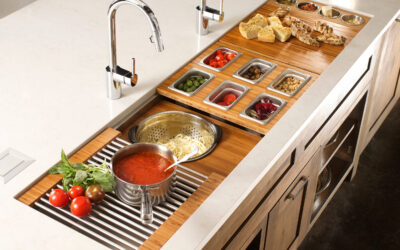
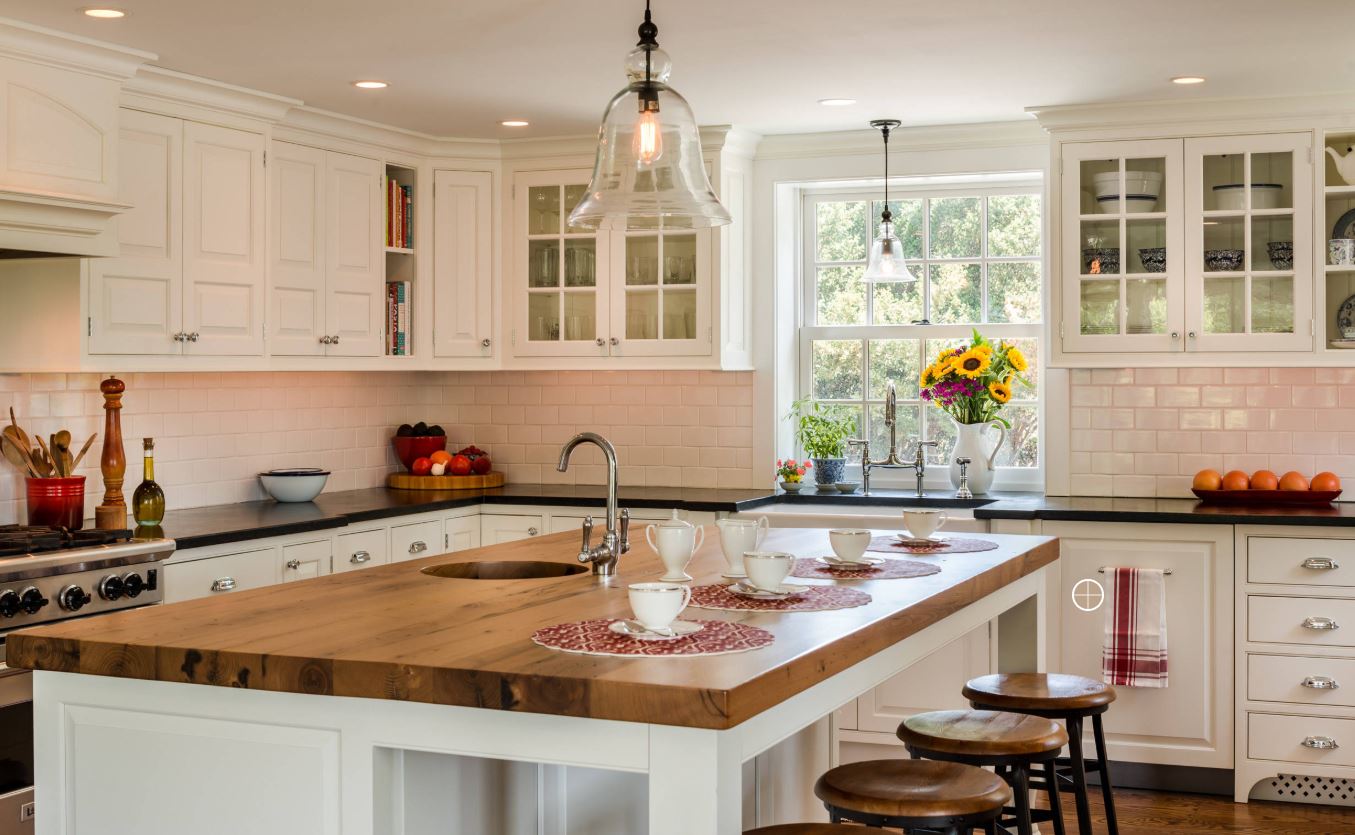
You don’t have to choose just one material. In fact, one of our favorite looks pairs a butcher block island with stone on the perimeter. As a result, you get a warm prep surface at the center of the kitchen and durable stone near the sink and range. Our posts on comparing quartz, granite and other countertop materials and the pros and cons of marble countertops can help you choose a partner surface. A workstation sink in the stone section rounds out a highly efficient prep zone.
See Butcher Block in Person
Wood is best appreciated up close, where you can see the grain and feel the finish. Visit our showroom to compare species and styles, and our design team will help you decide where butcher block fits best in your kitchen. Whether you bake every weekend or cook dinner every night, we’ll help you create a kitchen that’s built for the way you cook.