
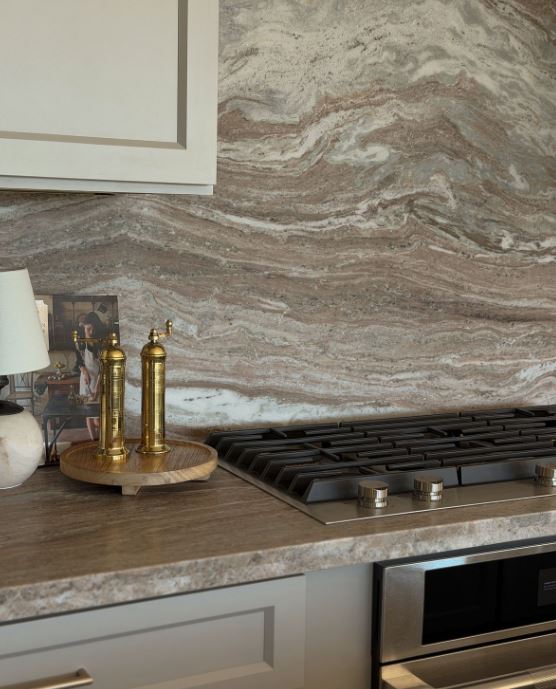
Few materials say “timeless kitchen” quite like marble. It has graced European bakeries and grand New England homes for generations, and it remains one of the most admired stones in our showroom. Before you fall in love with a slab of Carrara or Calacatta, though, it’s worth understanding the pros and cons of marble countertops. This is a stone that rewards homeowners who know exactly what they’re choosing.
The Pros and Cons of Marble Countertops at a Glance
The pros:
- Unmatched natural beauty, with veining no factory can truly replicate
- A classic look that won’t feel dated in ten or twenty years
- A naturally cool surface that bakers love
- Good heat tolerance compared to many engineered surfaces
- Every slab is one of a kind
The cons:
- Etches when it comes in contact with acidic foods and drinks
- Can stain if spills sit too long
- Softer than granite or quartzite, so it can scratch
- Needs periodic sealing and a little extra care
- Sits at the premium end of countertop pricing
Why Homeowners Love Marble
The biggest draw is simple: nothing else looks quite like it. Carrara offers soft gray veining on a white background, while Calacatta brings bolder, more dramatic movement. Because marble is quarried rather than manufactured, no two slabs are ever the same. Your countertop will be truly one of a kind.
Marble is also a joy to work on. It stays naturally cool, which is why pastry chefs have rolled out dough on it for centuries. If you’re the one making pie crusts every Thanksgiving, you’ll appreciate that. Marble also handles warm pans better than engineered quartz, although we still recommend trivets.
There’s a local connection, too. Vermont has a long marble tradition, and the Danby quarry inside Dorset Mountain is the largest underground marble quarry in the world. For many homeowners in our area, marble feels like a natural fit.
What to Know Before You Commit
Marble is a calcium-based stone, and that chemistry explains most of its drawbacks.
Etching: Lemon juice, tomato sauce, vinegar, wine and even some cleaners react with the surface. They leave dull, lighter spots called etch marks. Etching isn’t a stain; it’s a small change to the stone’s finish.
Staining: Red wine, coffee and cooking oil can soak in if they’re left sitting. Wiping up spills promptly prevents most problems.
Scratches: Marble is softer than granite and quartzite. Always use a cutting board, and avoid sliding heavy pots across the surface.
Maintenance: Marble should be sealed periodically. Depending on the sealer, that might mean every year or only every few years. Keep in mind that sealing helps with stains, but it won’t prevent etching.
Cost: Premium marble, careful slab selection and skilled fabrication all add up. Marble is an investment, much like fine cabinetry.
Honed vs. Polished: A Finish That Makes a Difference
Your choice of finish changes how marble lives day to day. A polished finish is glossy and elegant, but etch marks stand out against the shine. A honed finish has a soft, matte look that makes etching far less noticeable. For busy kitchens, many designers recommend honed marble for exactly this reason.
Weighing the Pros and Cons of Marble Countertops for Your Home
Marble is a wonderful choice if you love a lived-in, European look and don’t mind a bit of patina. Over time, small etches and marks blend into a soft, well-loved character. It’s also a beautiful option for a baking station, a statement island or a primary bathroom vanity.
However, if you want a surface that looks brand new forever, marble may frustrate you. In that case, consider quartzite, marble-look quartz or porcelain. Each can deliver a similar look with less upkeep. Our post on design choices for countertops can help you compare your options.
Tips for Living Happily with Marble
- Use cutting boards, trivets and coasters, especially near the sink and range.
- Wipe up acidic spills and oil right away.
- Clean with a mild, pH-neutral cleaner made for natural stone.
- Test your sealer by placing a few drops of water on the surface. If the stone darkens, it’s time to reseal.
- Remember that a stone professional can refinish marble to remove etching and restore its glow.
For more expert guidance, the Natural Stone Institute offers a helpful guide on how to care for marble countertops. You can also read what to expect in our step-by-step breakdown of new countertops.
See the Pros and Cons of Marble Countertops in Person
Photos can’t capture the depth of real marble. Seeing a full slab, touching a honed sample and watching the veining catch the light make all the difference. Visit our showroom, and our designers will walk you through the pros and cons of marble countertops alongside quartzite and quartz. Bring a cabinet door or paint sample, and we’ll help you find a surface you’ll love for decades. You can also explore our kitchen countertop guide before you stop in.