If you’re planning a kitchen refresh in New Hampshire or Vermont, proper range ventilation options deserve a spot near the top of your list. Beyond removing cooking odors, a good venting system clears heat, moisture, and grease particles that can otherwise settle on cabinets and drift through the house — a bigger concern in our tightly built New England homes designed to hold heat through long winters. Here’s a rundown of the main options.
Ducted Range Hoods
The gold standard for venting is a ducted hood that pulls air through ductwork and expels it outside. These come in several styles:
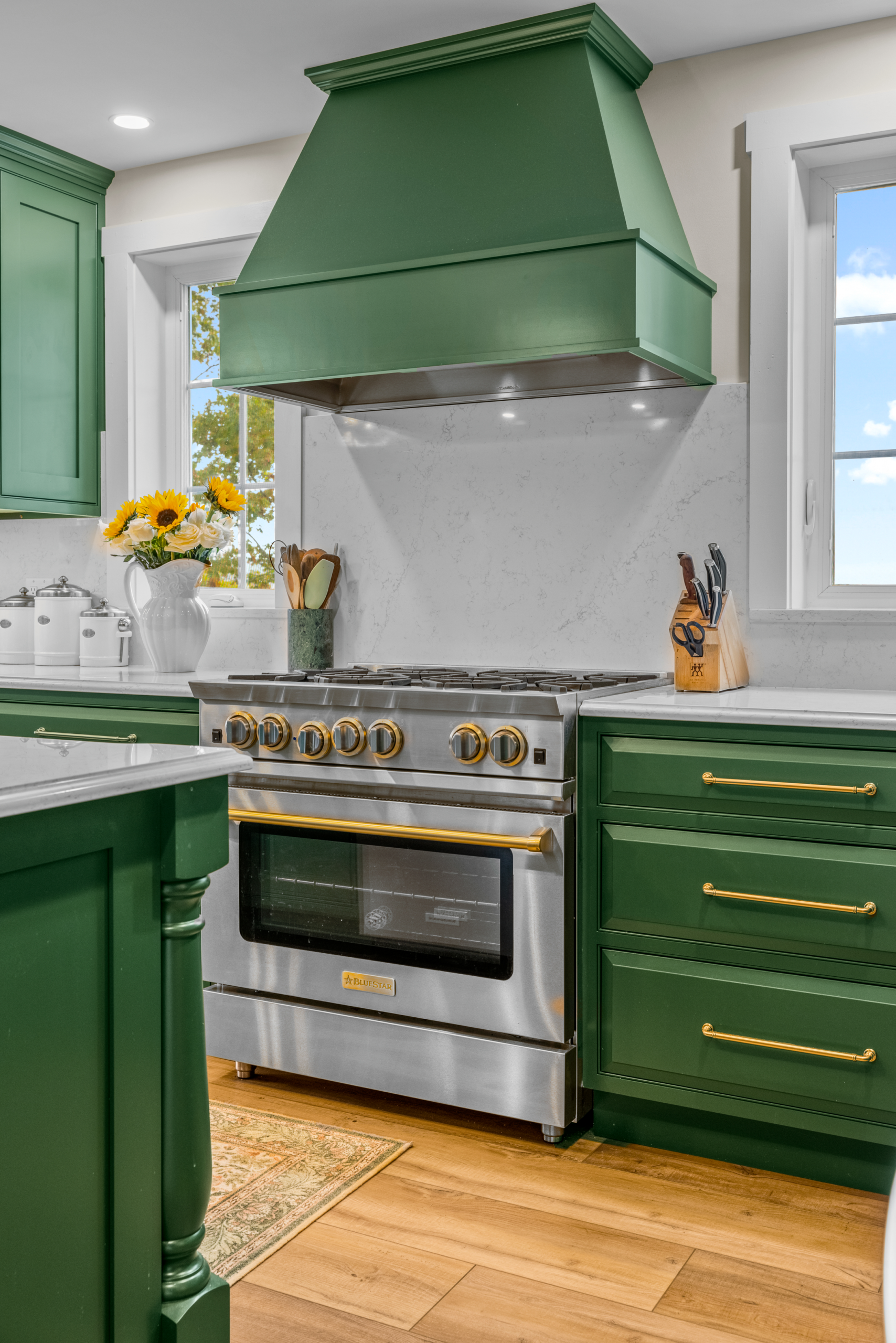
- Wall-mounted hoods sit above a range on an exterior wall, making ducting straightforward — ideal if your cooktop already backs up to an outside wall, common in many farmhouse-style New England kitchens.
- Island hoods hang from the ceiling over a cooktop island and route ductwork up through the roof, a popular choice as more homeowners open up their floor plans.
- Under-cabinet hoods tuck beneath upper cabinets and vent through the wall or roof, offering strong performance without dominating the room visually.
- Custom or built-in hoods get concealed behind cabinetry or a decorative surround, blending into a farmhouse, rustic, or modern kitchen design.
Ducted systems move air out of the house entirely, which makes them the most effective option for removing grease, smoke, and moisture — a real advantage during humid Vermont summers and when winter cooking (soups, roasts, holiday baking) fills the kitchen with steam.
Downdraft Ventilation
Downdraft systems are built into or rise up behind the cooktop itself, pulling air down and out through ductwork beneath the floor or through an exterior wall. These work well for kitchen islands or peninsulas where a hanging hood isn’t practical or would block sightlines to a great room. They’re generally less powerful than overhead hoods since smoke and steam naturally rise, but they’re a smart pick for open-concept renovations where a bulky hood would feel out of place.
Ductless (Recirculating) Hoods
Ductless hoods pull air through a charcoal or carbon filter to trap grease and odors, then recirculate the filtered air back into the kitchen. Because they don’t require ductwork, they’re far easier and cheaper to install — a practical option for older homes where running ducts through plaster walls or finished ceilings would be costly or disruptive. The tradeoff is that they don’t remove heat or humidity, and filters need regular replacement to stay effective.
Microwave-Hood Combinations
Many homeowners opt for an over-the-range microwave with a built-in vent fan. These can be ducted or ductless and offer a space-saving, budget-friendly upgrade, though their venting power is typically more modest than a dedicated hood.
Ventilation Options for Your Kitchen
For most New Hampshire and Vermont homes, a ducted hood offers the best long-term performance, especially if you cook frequently or use a gas range. But if your renovation budget or home’s layout makes ductwork impractical, a ductless hood or downdraft system can still meaningfully improve air quality. Whichever route you choose, match the hood’s fan capacity (measured in CFM) to your cooktop’s output. Contact us today at The Cabinet en-Counter to ensure your new kitchen is comfortable, fresh, and ready for the next family gathering.