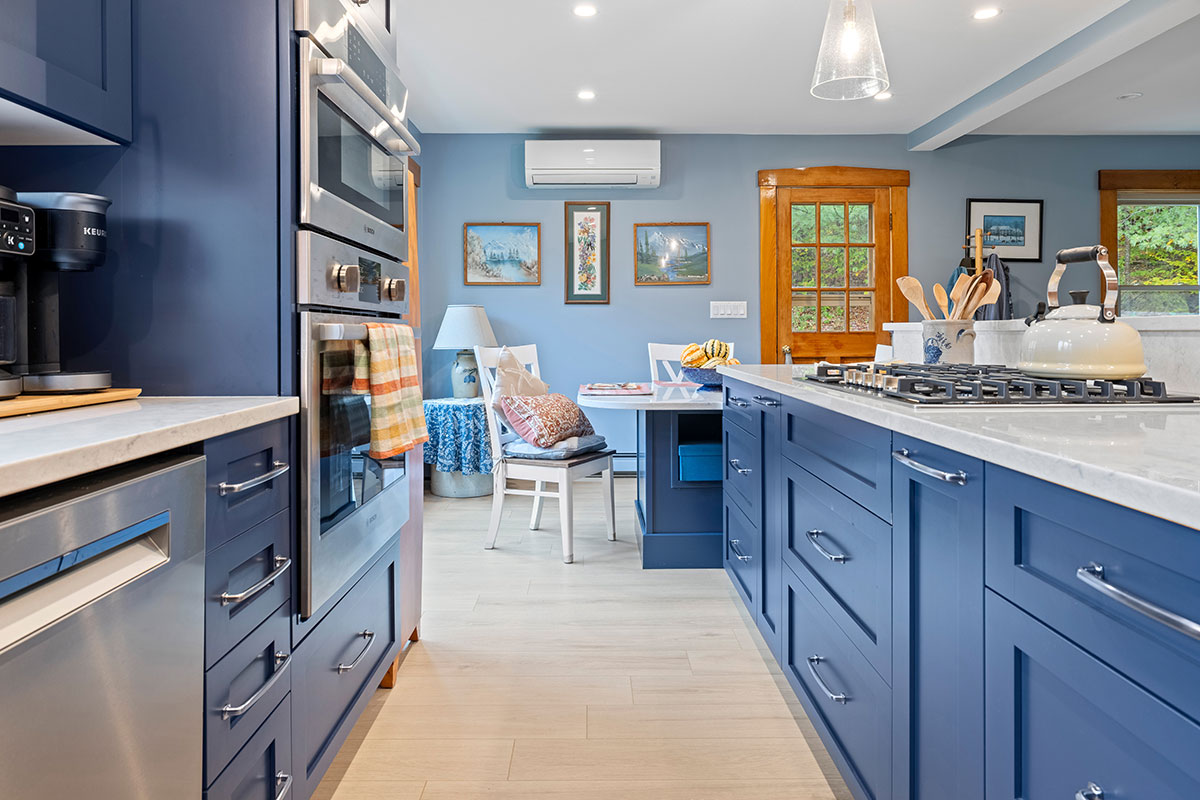
If you’re planning a kitchen remodel this year, you’ve probably noticed the cooktop and range aisle looks different than it did even three or four years ago. The gas-versus-electric conversation that used to dominate every showroom visit has quietly expanded into something more interesting — and more relevant to how we actually live here in northern New England, from mud season to stacking wood for the woodstove. Here’s what our team is seeing homeowners get most excited about right now in terms of cooktops and ranges.
Induction Cooktops and Ranges Have Officially Grown Up
Induction cooking isn’t a novelty anymore — it’s become the default recommendation for most of our remodel clients. The technology heats cookware directly through electromagnetic energy rather than heating a coil or flame underneath it, which means water boils faster, simmers hold rock-steady, and a spill on the cooktop surface doesn’t turn into a smoking mess because the surface around the pan stays cool.
What’s changed for 2026 is flexibility. “Freedom” style induction surfaces — pioneered by brands like Thermador and now showing up across the luxury tier — let you set a pot anywhere on the cooktop instead of lining it up over a specific burner. Combine that with better zone detection and bridge elements that let two zones act as one long griddle or oversized burner for a stockpot or fish poacher, and induction stops feeling like a compromise and starts feeling like an upgrade.
There’s also a genuinely clever development worth mentioning for open-concept kitchens and islands: induction cooktops with ventilation built directly into the surface, pulling steam and smoke down and away without an overhead hood. For clients who’ve been wrestling with where to put a hood over an island without blocking sightlines to the family room, this is the first real answer we’ve seen.
Why Options for Cooktops and Ranges Matter More Here Than Elsewhere
For homeowners in Vermont and New Hampshire specifically, induction comes with a couple of extra selling points beyond performance:
It’s easier on indoor air quality during the months you’re sealed up tight. Gas cooking produces combustion byproducts that have nowhere to go when your windows are shut from October through April. Induction eliminates that entirely.
Local utilities are paying you to switch. Vermont utilities including Green Mountain Power, Burlington Electric, and Stowe Electric are currently offering rebates around $200 toward an induction cooktop or range when it replaces a gas unit, and Efficiency Vermont maintains a running list of which utilities are participating. New Hampshire homeowners should also keep an eye on the state’s Home Electrification and Appliance Rebates program, which is expected to launch this summer and will include cooking appliances.
It’s worth planning around outages. The honest conversation we have with clients up here is about backup power — a fully electric kitchen is only as reliable as your electricity, and winter ice storms happen. For homes without a generator, we often talk through a dual-fuel range (gas cooktop, electric convection oven) as a middle path, or make sure a portable induction burner or the woodstove is part of the household’s outage plan. It’s a five-minute conversation that saves a lot of frustration later.
Smart Ovens Are Finally Useful, Not Just Flashy
The “smart oven” gimmicks of a few years ago have given way to features that actually save people time. Built-in cameras that recognize what you’ve put in the oven — a whole chicken, a tray of cookies, a rack of bacon — and adjust cooking time automatically as it browns are showing up in new double wall ovens this year, along with the ability to check on dinner from your phone instead of opening the door and losing heat. Rapid preheat that gets an oven to 350°F in well under ten minutes, and no-preheat air fry settings, are becoming standard rather than premium add-ons.
Professional-Style Ranges Keep Their Following
For clients who want a kitchen that looks and cooks like a professional’s, nothing has slowed the appeal of a commercial-style range with big BTU burners, cast iron grates, and a presence that anchors the whole room. Brands like Wolf, BlueStar, and La Cornue continue to lead here, now often blending that classic look with dual-fuel or induction options underneath, so you don’t have to choose between the aesthetic and the efficiency.
What We’d Recommend Asking Yourself
Before you fall in love with a floor model, it’s worth thinking through:
- How much cooking do you actually do at once? Larger households benefit most from the flexible “freedom” induction zones and bridge elements.
- Do you host? Features like Wi-Fi connectivity and remote monitoring matter more if you’re juggling a big meal and guests at the same time.
- What’s your backup plan for a power outage? This is a bigger question here than it is in most parts of the country.
- Is your electrical panel ready? Induction ranges typically need a 240V circuit — if you’re converting from gas, it’s worth having an electrician look at your panel early in the planning process, not after the appliance arrives.
We’re happy to walk through any of this information on cooktops and ranges in the showroom, where you can actually feel the difference between a smooth-glide induction dial and a snap-to knob, and see the finishes in the light your kitchen will actually get. Stop in to Cabinet en-Counter, or give us a call to set up a time.